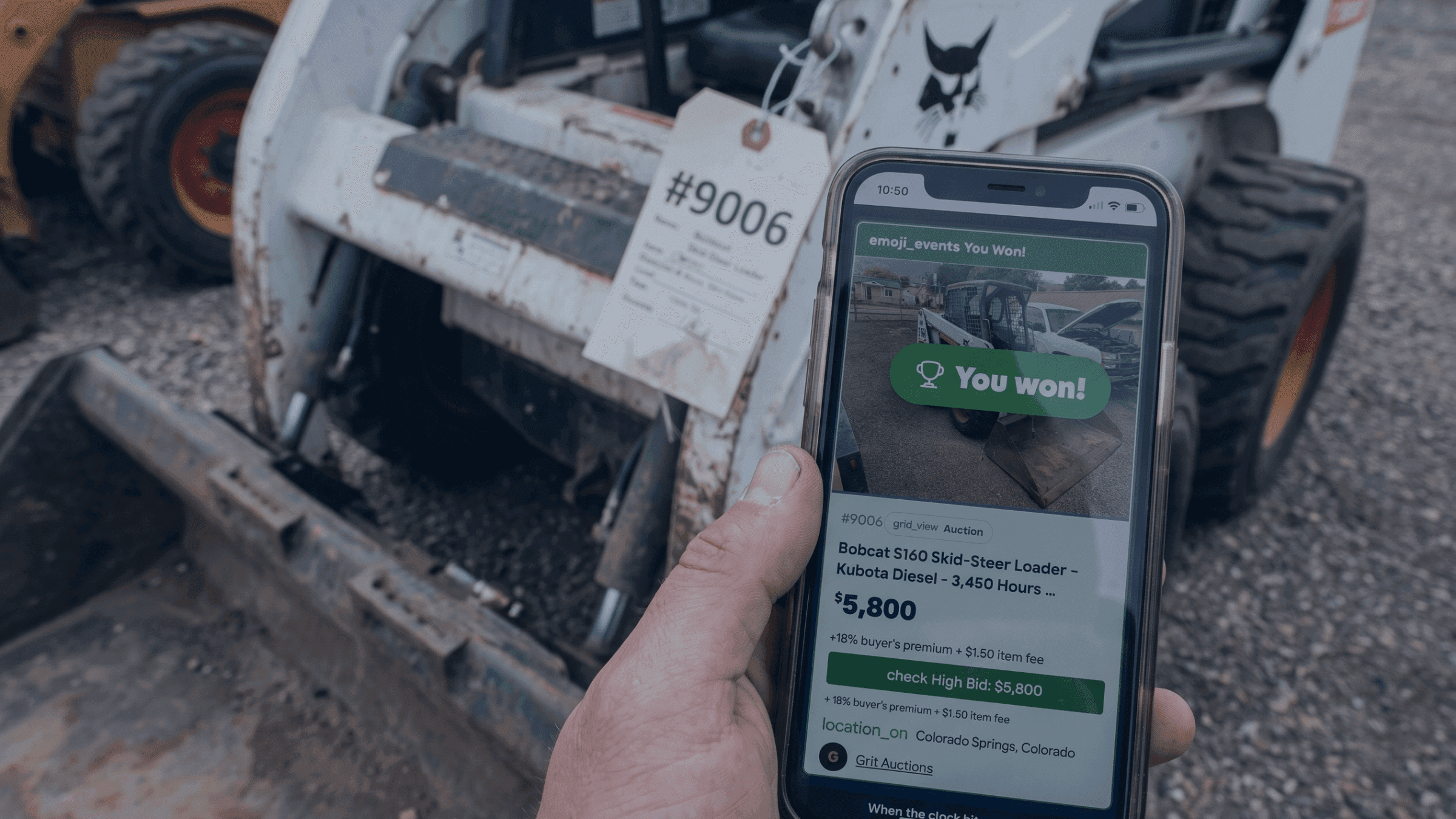
If you've never shopped at an online auction before, you probably have a picture in your head of what auctions are like.
Maybe you're imagining antiques, crowded auction houses, and someone talking a mile a minute.
Online auctions look a little different.
At Equip-Bid, you can browse and bid online on everything from everyday household items to tools, appliances, vehicles, commercial equipment, and business assets.
So, let's clear up some of the biggest misconceptions.
Myth #1: Everything at an auction is used
Not even close.
Auction inventory can come in many different conditions.
On Equip-Bid, you may find merchandise that is Factory Sealed, Appears New, Open Box, Damaged, Partial/Incomplete or doesn't have a product condition assigned at all.
We encourage sellers to use Equip-Bid’s product condition labels, but it is not required.
For example, Factory Sealed means the package has not been opened, and the product has not been handled.
So don't assume auction automatically means used.
Instead, evaluate each listing individually.
Myth #2: Auctions are only for antiques and collectibles
Antiques and collectibles can certainly show up at auction.
But they're only part of the picture.
Depending on what's currently available, Equip-Bid shoppers can find things like:
- Tools
- Appliances
- Furniture
- Electronics
- Lawn and garden equipment
- Vehicles
- Construction equipment
- Restaurant equipment
- Business and industrial equipment
- Household goods
- Collectibles
- Overstock and retail merchandise
Equip-Bid's marketplace covers both personal and commercial property, with auction categories ranging from business liquidations and heavy equipment to retail, overstock, and industrial assets.
You might come looking for a collectible.
You might leave with a lawn mower.
That's part of the fun.
Myth #3: You have to attend an auction in person
Not anymore.
With an online auction, you can browse listings and place bids online.
You don't have to stand in a crowd waiting for your item to come across the auction block.
That means you can browse auctions when it's convenient for you, review listings, decide what you're interested in, and bid online.
You may still need to visit the auction location for inspection or pickup, depending on the auction terms.
But the actual bidding?
That's online.
Myth #4: Something must be wrong with it if it's cheap
A low current bid doesn't automatically mean there's something wrong with the item.
Remember how auctions work.
The current bid is not necessarily the final price.
An item may start low and increase as bidders compete.
Sometimes you may also find an item with less competition than you expected.
That's the opportunity Deal Seekers are hunting for.
Condition still matters, though.
Read the description.
Look through all the photos and videos.
Check the product condition if one is listed.
Use inspection when available.
And if something important isn't clear, contact the seller before bidding.
A low bid should make you curious.
It shouldn't make you assume.
Myth #5: Auction items are always damaged
Some auction merchandise is damaged.
And when a seller uses Equip-Bid's Damaged condition, it means there is a known issue with the item.
But that doesn't describe everything on the marketplace.
You may also encounter Factory Sealed, Appears New, Open Box, and Partial/Incomplete merchandise, along with listings where no condition category has been assigned.
That's why it's important to judge the individual listing, not auctions as a whole.
Read. Look. Ask questions.
Then decide whether the item makes sense for you.
Myth #6: You need to be an auction expert to bid
You don't need years of auction experience to get started.
You do need to pay attention.
Before bidding, make sure you:
- Read the item description.
- Look through every photo and video.
- Understand the product condition if one is listed.
- Read the auction terms.
- Check the buyer's premium and item fee.
- Know when and where pickup happens.
- Ask the seller if something important isn't clear.
Auctions on our site have an 18% buyer's premium and a $1.50 item fee, so remember to include that, along with applicable sales tax and any other disclosed auction-specific charges, when deciding your maximum bid.
The more auctions you participate in, the more familiar the process becomes.
Myth #7: If it's normally included, it'll be included at auction
This assumption can get new bidders into trouble.
Let's say you're looking at a power tool that normally comes with a battery, charger, and carrying case when purchased new.
That doesn't automatically mean all three are included in the auction.
If the charger isn't mentioned in the description and isn't shown in the photos or video, don't assume it's included or guaranteed.
The same goes for:
- Batteries
- Cords
- Remotes
- Keys
- Hardware
- Attachments
- Manuals
- Accessories
- Extra parts
Bid on what the listing says and shows, not what you know the product normally includes at retail.
If something matters to your decision and the listing doesn't make it clear, contact the seller before bidding.
Myth #8: Online auctions are sketchy
Online auctions are a legitimate and established way to buy and sell property.
Equip-Bid has been connecting bidders and sellers through online auctions since 2009, with trust, simplicity, and transparency at the center of the brand.
Equip-Bid's stated vision is to be the most trusted auction platform in the United States.
That doesn't mean you should stop paying attention.
Quite the opposite.
Use the official Equip-Bid platform.
Protect your account information.
Read the auction terms.
Review the entire listing.
Understand what you're bidding on.
Know your total cost.
Plan your pickup.
And inspect your merchandise before leaving the pickup location.
A trustworthy marketplace and an informed bidder make a pretty good combination.
Auctions are probably different than you think
Online auctions aren't just antiques.
Everything isn't used.
You don't have to stand in an auction house.
And a low current bid doesn't automatically mean something is wrong.
What you do need to bring is a little curiosity and a willingness to read before you bid.
Look through the listing.
Know the terms.
Ask questions when you have them.
Set your maximum.
Then see what happens.
Because once you get past the myths, you might understand why Deal Seekers keep coming back.