Online auctions are part treasure hunt, part competition, and a whole lot of opportunity.
Maybe you need tools for a project or equipment for your business. Maybe you spotted something you didn't know you needed until five minutes ago. Whatever brought you here, knowing how auctions work makes it easier to bid with confidence and spot a great deal.
How do online auctions work?
Items are listed for a set time. Registered bidders place bids, and the highest bidder when the item closes wins it, under that auction's terms.
On Equip-Bid, every bid is a max bid. You enter the most you'd pay, and we bid for you just enough to keep you in the lead. If someone bids in the final minutes, the item stays open, so last-second bids can't steal a deal. See how bidding works.
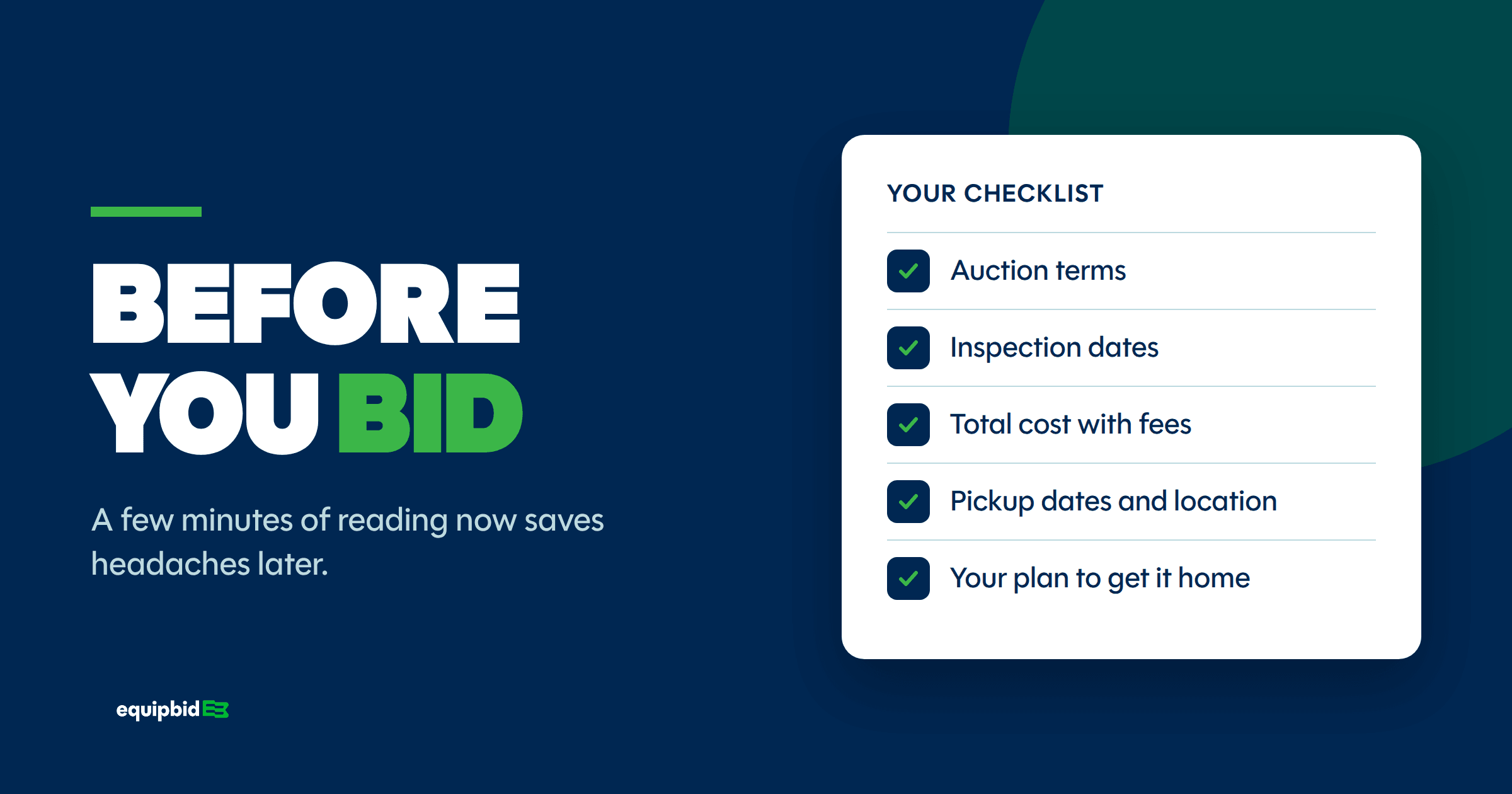
Each auction is run by a seller, with its own terms, inspection dates, and pickup location. Before you bid, read the listing, check the condition and photos, and know when and where you'd pick up. See Before you bid for the full checklist.
Why do some items sell for so little?
It's the question every new bidder asks. What's the catch?
Sometimes there isn't one. A store sets a price and waits for someone to pay it. At an auction, bidders set the price by competing.
Sellers may be moving returns, extra inventory, business assets or estate items, and they'd rather sell quickly than wait for full retail. And sometimes an item just doesn't draw much competition.
Find the right item at the right auction on the right day, and you might land a price that feels too good to be true. That's the treasure hunt.
Know your total cost
Your winning bid isn't your final total. Auctions hosted on Equip-Bid add an 18% buyer's premium, and every item has a $1.50 item fee, plus sales tax. Some sellers add special fees too.
Do the math before you bid, and decide your limit before the excitement takes over. See Buyer's premium and fees.
Plan your pickup before you bid
Winning is only half the deal. You still have to get it home.
Pickup dates aren't suggestions, and missing them can mean fees or losing the item. Check the location and removal dates before you bid. Then bring the right vehicle, supplies, and help.
A commercial refrigerator is a fantastic deal until you're standing next to it with a compact car. See Pickup and shipping.
Auction terms worth knowing
- Max bid: the most you're willing to pay. We bid for you up to that amount.
- Hammer price: your winning bid, before fees.
- Buyer's premium: a percentage added to the hammer price.
- Item fee: a $1.50 fee added to each item
- Reserve: the lowest price a seller will accept. If bidding doesn't reach it, the item may not sell.
- Extended bidding: a bid in the last five minutes keeps the item open until five minutes pass with no new bids.
- Inspection: a scheduled time to see items in person before the auction closes.
- Removal dates: when winning bidders pick up their items.
- Item condition: a label like Factory Sealed, Open Box, Damaged, or Partial/Incomplete that gives you a quick read on an item. See Item conditions explained.
Why buy at auction instead of retail?
Retail is built around convenience and fixed prices. Auctions offer something different: opportunity.
Instead of a store shelf, you get a constantly changing mix of personal and commercial property, with bidding that can land you below-retail prices. You never quite know what you'll find, and that's half the fun.
It's why we exist: to connect people with opportunity, helping sellers move inventory and bidders find what they need.
Ready for your first deal?
Online auctions aren't hard. They're just different.
Read before you bid. Know your total cost. Make a pickup plan. Decide your limit before the bidding gets exciting. Then see what's out there.
Buy. Sell. Win!