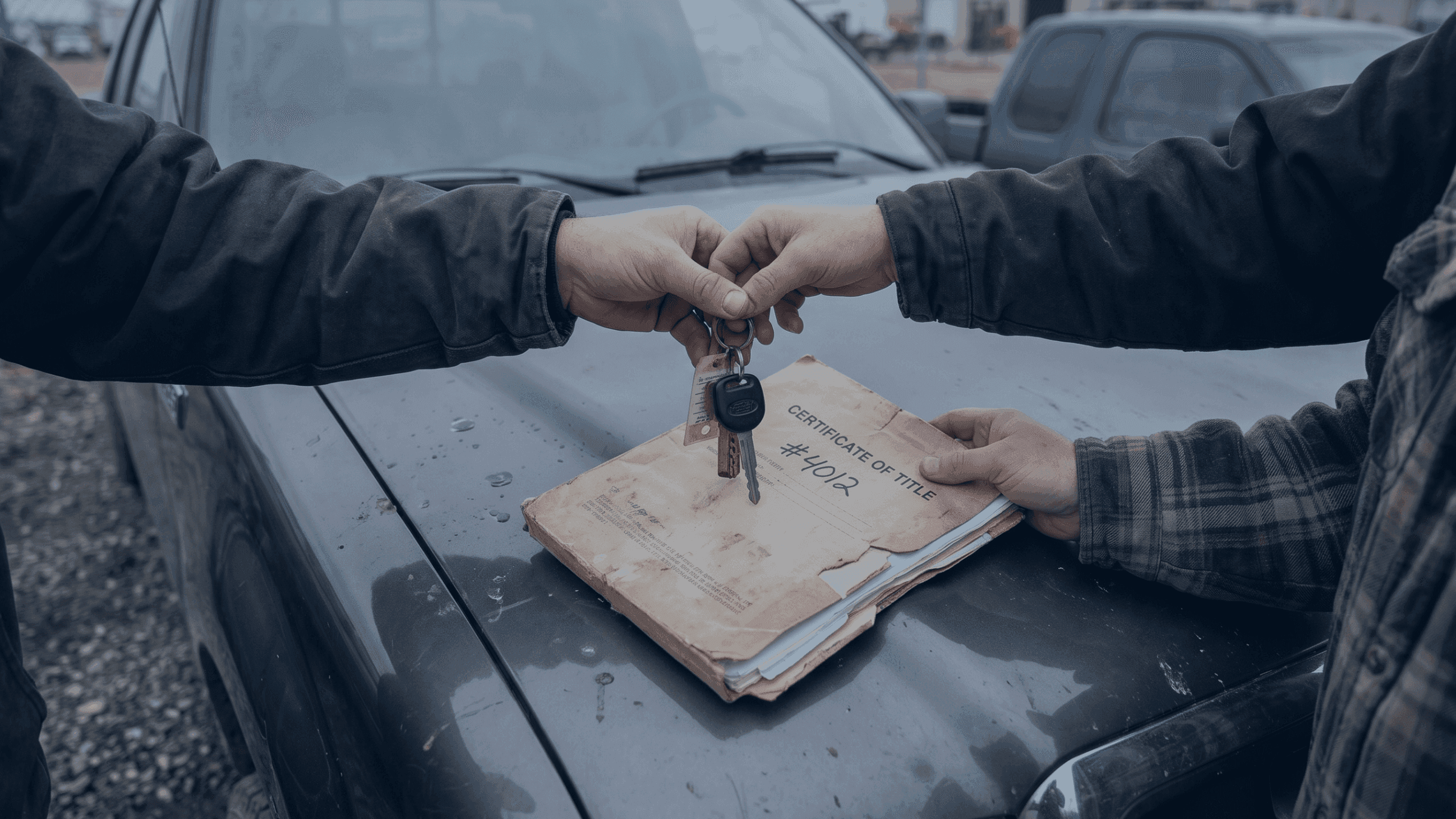
Winning a vehicle at an online auction is exciting. But before you can put it on the road, there may be a few more boxes to check.
Depending on the vehicle, where you live, and the paperwork included with the sale, you may need to transfer the title, register the vehicle, pay applicable taxes and fees, obtain insurance, complete an inspection, or provide additional documentation.
The exact process varies by state and, in some cases, by county or local jurisdiction. Here's what to know before heading to your local motor vehicle office.
Before you bid: Check the title information
The best time to think about a vehicle's title isn't after you win. It's before you bid.
Read the entire auction listing and review the photos carefully. Look for information about:
- Whether a title is included
- The type or status of the title, if stated
- Known liens or other title information disclosed in the listing
- Whether additional paperwork is mentioned
- The vehicle identification number (VIN), when provided
- Pickup requirements
- Any seller-specific terms or instructions
Never assume a vehicle has a clean or transferable title simply because it is being sold at auction.
If something about the title or paperwork isn't clear, contact the seller before bidding. Use the contact options available on the auction or listing to ask questions directly.
You won the vehicle. Now what?
Your next steps depend on where you live, where the vehicle came from, the type of vehicle, and the paperwork associated with the sale.
Depending on your location and the particular transaction, documents you may be asked to provide could include:
- The vehicle's title
- A bill of sale or other proof of purchase
- Your auction invoice or receipt
- Identification
- Proof of insurance
- VIN documentation
- Inspection or emissions documentation
- Tax-related documentation
- Other state or local forms
This is not a universal checklist. Some states may require documents that aren't listed here, while others may not require everything above.
Check with the state or local agency responsible for vehicle titles and registrations to find out exactly what you'll need.
Keep in mind that if the invoice total is over $2,000, you'll pay by wire transfer instead of credit card.
Before you leave pickup: Double-check your paperwork
This is one of the most important steps when picking up a vehicle. Arrive to pickup with your QR code for checkout from your invoice and a photo ID.
Don't just make sure you have the paperwork. Make sure the information on it matches the vehicle and is consistent across the documents.
Before leaving pickup, compare details such as:
- The VIN on the vehicle against the VIN shown on the title and other paperwork
- The year, make, and model
- Bidder and seller information, where applicable
- Names and signatures in any required fields
- Dates and purchase information
- Odometer information, if included
- Title numbers or other identifying information
- Any other vehicle details appearing across multiple documents
- Whether the paperwork stated in the listing or provided by the seller is actually in your possession
Pay especially close attention to the VIN. With a 17-character VIN, even one incorrect letter or number could create an issue when you attempt to title or register the vehicle.
If something doesn't match, appears incomplete, or looks incorrect, bring it to the seller's attention before you leave the pickup location whenever possible.
It's much easier to ask a question while you, the vehicle, and the seller are all in the same place than to discover a discrepancy later when you're standing at a motor vehicle office.
You don't need to be an expert in title paperwork. You're simply checking that the basic information on the documents matches the vehicle you're taking home.
Transferring the title
For many auction vehicle purchases, one of the primary steps is transferring ownership into the bidder’s name.
The process can vary significantly depending on factors such as:
- The state where the vehicle was purchased
- The state where you're titling it
- Whether you're buying as an individual or business
- The vehicle's age and type
- The title's current status
- Whether the vehicle came from another state
- Whether there are liens or other issues associated with the title
Follow the current instructions provided by the motor vehicle agency that will process your title.
If the agency requires information or documentation you don't have, contact the auction seller to determine what documentation is available from the sale.
What if you bought the vehicle in another state?
Online auctions can make it possible to find vehicles well outside your hometown, which also means you may occasionally purchase a vehicle located in another state.
Don't assume the rules from the state where you bought the vehicle are the same as the rules where you live.
Your home state may have additional requirements for an out-of-state vehicle, which could include things such as a VIN verification, inspection, emissions test, documentation review, or another step.
Check with the agency where you plan to title and register the vehicle for its current out-of-state vehicle requirements.
What about taxes and fees?
Purchasing a vehicle at auction can involve several different costs beyond the winning bid.
Depending on the transaction and your location, you could encounter costs such as:
- Buyer's premium
- Item fee
- Sales or use tax
- Title fees
- Registration fees
- Inspection or emissions fees
- Local fees
- Other government-required charges
The amount, timing, and collection of these costs vary.
When deciding how much you're willing to bid, consider the total cost, not just the current bid price.
Can you drive the vehicle home from pickup?
Don't assume that winning a vehicle means you can immediately drive it away.
Whether a vehicle can legally be driven from the pickup location can depend on its registration, plates or temporary operating authority, insurance, condition, and applicable state laws.
It may also simply not be mechanically safe to drive.
Figure out your transportation plan before pickup. If you aren't certain that the vehicle can legally and safely be driven, you may need to arrange a trailer or professional transport.
What if the vehicle doesn't have a title?
Pay especially close attention to listings involving vehicles advertised without a title or with unusual title circumstances.
The ability to obtain a title for a vehicle without standard title documentation varies considerably by jurisdiction and circumstance. There is no single process that applies everywhere, and obtaining a replacement or alternative title is not guaranteed.
If a listing says no title, treat that information seriously when deciding whether and how much to bid.
Before bidding, contact the motor vehicle agency where you would need to title the vehicle and ask what, if anything, would be required for that particular situation.
What about salvage, rebuilt, or other branded titles?
A vehicle's title history or brand can affect what you need to do next.
States may use different terminology and may have different inspection, documentation, insurance, registration, or operating requirements for vehicles with salvage, rebuilt, flood, or other title brands.
If a listing identifies a particular title status, research what that status means in the state where you intend to title and register the vehicle before you bid.
Keep your auction documents
Don't throw away your auction paperwork once pickup is complete.
Keep copies of the listing, invoice, payment receipt, title documents, bill of sale if provided, and any other paperwork associated with the transaction.
Your Equip-Bid invoices stay in your auction dashboard for future reference.
It's also a good idea to save a copy or screenshot of the original auction listing for your records.
Keeping everything together can make it much easier to reference the details of the transaction if you need them later.
A little research before bidding goes a long way
Vehicles can be some of the most exciting finds at an online auction, from work trucks and project cars to motorcycles, trailers, ATVs, and everyday vehicles.
But buying at auction isn't the same experience as buying a brand-new vehicle from a traditional dealership.
You're responsible for reviewing the listing, understanding what is included, considering the vehicle's condition and title information, and determining what your state requires to title, register, transport, or operate your purchase.
Before placing a bid:
Read the listing. Review the photos. Check the title information. Ask the seller questions using the contact options available on the auction. Verify your state's requirements.
And when you win:
Check the vehicle. Check the VIN. Check your paperwork. Then check it all one more time before you leave.
A few minutes of research and double-checking can save you a much bigger headache later.